




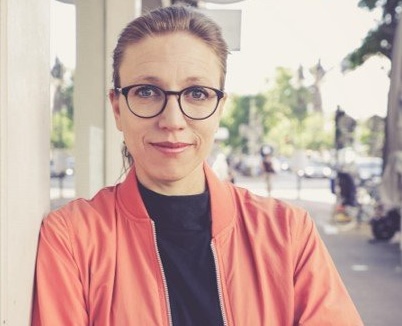
Interview with Ana Rau, Managing Director of the German Forum for Urban Security (DEFUS)
January 2026 – The German Forum (DEFUS) has recently launched a project to help local authorities tackle synthetic opioids, in partnership with three Efus member cities: Berlin, Essen and Hannover. We’ve met with Ana Rau, DEFUS’ Managing Director.
How are German cities affected by drug- and trafficking-related issues? Are drug networks expanding their reach across Germany into ever smaller cities, as observed in other European countries?
Ana Rau (AR): Organised crime has been a problem for a very long time in Germany. The difference today is that it is becoming more violent and also more publicly violent. There has been a series of incidents in the past few years that have been widely reported in the media.
Regarding the expansion of trafficking, what is notable now is that the market offers everything, everywhere to everyone, as the European Union Drug Agency (EUDA) noted in its 2024 report. Consumers order online via Telegram or the dark net; they even get a user manual and can track their delivery. In cities, you can have drugs delivered to your door day and night and the delivery person will come in a large, luxurious car.
What are the priorities of DEFUS and of German member cities regarding drug consumption and trafficking?
AR: One of the areas we are intensely working on at the moment is open drug scenes, i.e., consumption in public spaces. As such, we have just finalised a research study commissioned by a city on an open drug scene they have on a particular square. The presence of these groups in that square creates tensions with local residents and businesses, and the City Council will use the results of our research to review their policy on this particular drug scene.
Another example is that we organised for our German member cities a field visit to Zurich (Switzerland), which is considered one of the world’s best approaches for dealing with open drug scenes. The Zurich Model is at the heart of Switzerland’s four-pillar policy on drugs, which combines prevention, therapy/counselling, harm reduction, and regulation and enforcement.
Many German cities are keen to adopt the Zurich approach, even though it is hotly debated in Germany among other things because in Switzerland, some drug consumption rooms turn a blind eye on limited amounts of drugs being dealt in their backyard. In Germany, we struggle to accept such grey zones between what is legal and not.
“Our objectives are to gather data on the drug landscape and to develop a warning system for users and crisis communication systems for municipal services in case an overdose cluster is detected.”
German cities, like many other Efus members, are also confronted with the arrival of new, synthetic drugs. Do they have a specific approach on that?
AR: We do not yet have a situation comparable to that of the USA and Canada, but tested drug samples in cities such as Frankfurt and Bremen do include opioids. This is why we started in April a two-year project with three partner cities – Berlin, Essen and Hannover, which are all Efus members – with the objective of ensuring that local authorities, harm reduction facilities and political representatives are prepared to tackle the situation before it hits Germany. We also have as a partner the German HIV/AIDS organisation, called Deutsche Aidshilfe. Titled so-par, this project is funded by a private donation.
One of the aspects of this project is to install drug testing kits in Drug Consumption Rooms. We have delivered 200 tests to each of our three partner cities. Made available to drug users in a safe environment, they allow them to check whether their drug contains synthetic opioids and thus take an informed decision. For us, the tests are a way to monitor the local drug situation and see whether opioids have arrived in Berlin, Essen and Hannover. If a test is positive, we will send it to a lab to determine which precise synthetic substance the drug contains.
What are the other main aspects of the so-par project on synthetic opioids?
There are two main other aspects: one is training local stakeholders – local police officers, municipal officers, third sector actors – in the use of (drug substitution product) naloxone; the other is to set up a synthetic opioid monitoring system for each of the three partner cities in collaboration with the local authority and the local police.
What we already know is that this type of drug is not delivered through open drug scenes but online: there is an assumption that it’s coming through Telegram, the dark web and some party scenes. The idea, besides gathering data on the drug landscape, is to develop a warning system for users and crisis communication systems for the city administration in case of an overdose cluster.
“Any opportunity to exchange and look for common solutions is welcome, especially at a time when some political movements are questioning policies based on prevention and harm reduction.”
Efus launched the Coalition of the willing initiative to find through collective action tools to strengthen prevention and action against drug-related violence…
DEFUS welcomes this initiative, notably because it will allow all stakeholders to have an on-going, open discussion on how to tackle drug- and trafficking-related issues. Any opportunity to exchange and look for common solutions is welcome and indeed very much needed, especially at a time when some political movements here in Germany, but also elsewhere in Europe, are questioning policies based on prevention and harm reduction.
Precisely, Germany’s drug policy is essentially based on harm reduction as opposed to repression. Indeed, you have recently legalised cannabis and there are Drug Consumption Rooms all over the country… But has the political consensus started to fray?
Our political landscape is evolving and some politicians have started to criticise this approach, arguing it doesn’t work and that Drug Consumption Rooms have a honey pot effect, even though research has widely established this is not the case. This said, harm reduction as such is not questioned. It’s clear for everyone that it is one, highly necessary, avenue for addressing the problem. On the other hand, we observe an increase of immiseration of drug users and more conflicts within and with open drug scenes. We have to take into account the needs of local residents and businesses and discuss which behaviour society should tolerate and which not.
> More on Efus’ work on the topic of drugs
> More about the Coalition of the willing – against drug-related violence and trafficking
> More on the German Forum for Urban Security (DEFUS)
Photo at the top: the Brandenburg Gate in Berlin – ©iStock chrisintai


