




European regions look to boost security workforce
March 2026 – Europe is experiencing an acute, systemic shortage of skilled labor in the security and safety sectors driven by rapid technological advancements, an aging workforce and low job attractiveness.
On the other hand, demand from public administrations and private businesses is increasing in the face of multiple and evolving security threats such as cyber-attacks and mass digital or power breakdowns, disasters linked to climate change, and rising geopolitical tensions.
European regions
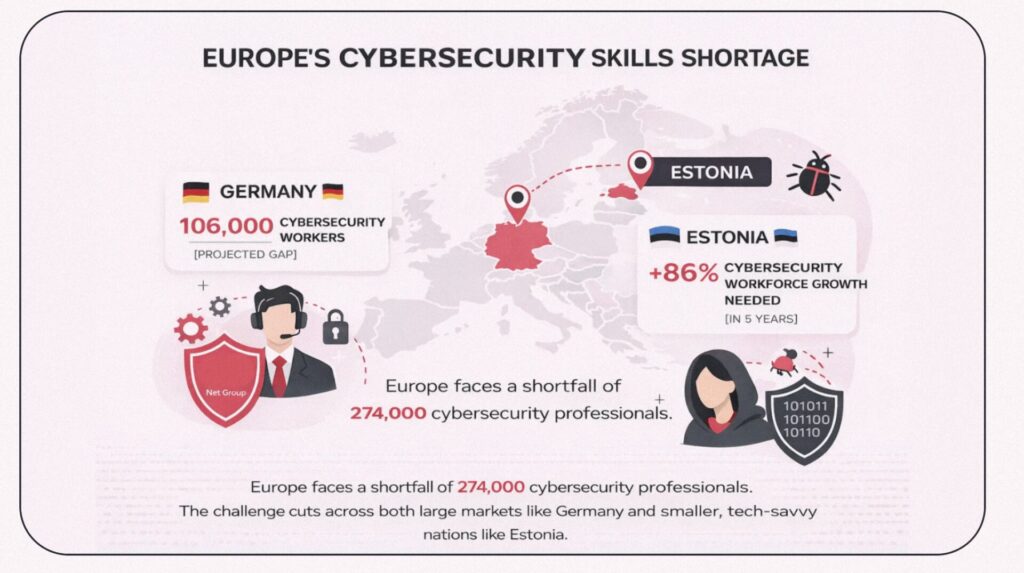
Indeed, according to the EU Agency for cybersecurity ENISA, Europe faces an estimated gap of 424,000 cybersecurity experts as of 2026 (with 1.4 million in place vs. 1.8 million needed), of which 274,000 are needed to protect EU Member States’ critical infrastructure.
How to attract more people into safety and security jobs? How to ensure they’re tooled up to keep abreast of rapidly evolving technologies? How to retain them? A group of European regions is working on addressing this challenge through an EU-funded project in which Efus is a partner, titled SafeSkills.
SafeSkills fosters direct exchanges of know-how and practices among European regions to ensure the long-term availability of a skilled workforce in the safety and security sectors.
Good practices and novel solutions
Started in May 2025, this four-year project is led by the Tampere Region in Finland and gathers as partners, besides Efus, the Rzeszow Regional Development Agency in Poland, the Provence-Alpes-Côte d’Azur Region in France, and the Barcelona City Council in Spain. The Odessa Region in Ukraine is a partner with observer status.
SafeSkills seeks to foster direct exchanges of know-how and practices among European regions to enable them to strengthen their policy frameworks, improve skills anticipation and training systems, and ensure the long-term availability of a skilled workforce in the safety and security sectors.
As such, the project partners will:
- Identify good practices and novel solutions through direct exchanges among the European regions that are partners in the project,
- Help regional and local policymakers improve and design policies ensuring long-term skilled labour availability,
- Strengthen the ability of regional and local actors to forecast training needs,
- Create training programmes that match those needs through multidisciplinary cooperation.
Resilience
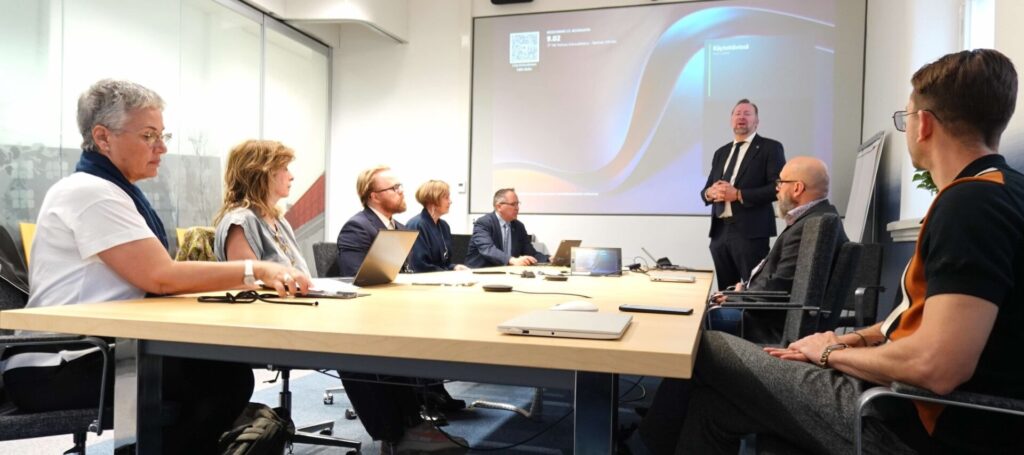
The project started in earnest in June last year with a field visit in Tampere. Finland, a small country that shares a 1,340 km-long border with Russia, has set up over the years a comprehensive security model based on the resilience of the whole of society. Called kokonaisturvallisuus, it brings together public authorities, private companies, universities and civil society in a shared responsibility for resilience.
At the heart of this ecosystem is the Tampere Region Safety and Security Cluster, a well-established cooperation platform bringing together more than 90 formal members and hundreds of organisations involved in joint, annual initiatives. The cluster connects industry, research institutions, police & rescue services, and regional authorities to foster innovation, preparedness and skills development.
Finland, a small country that shares a 1,340 km-long border with Russia, has set up over the years a comprehensive security model based on the resilience of the whole of society.
Local initiatives
During the visit, the project partners learned how the cluster feeds directly into regional policy instruments such as the Pirkanmaa Regional Development Programme (2022-2025) and the forthcoming employment strategy. Security is not treated as a standalone issue, but as a driver of competitiveness, innovation and social resilience.
They were also presented with several local initiatives, such as the use of AI by the Tampere City Council to match jobs and workers, or a school where students learn industrial skills that match employers’ needs.
Common challenges
The partners also shared insights about their local ‘skills landscape’, identifying common challenges among the four regions involved in the project:
- a shortage of cybersecurity and digital security professionals
- the need for modular, lifelong learning pathways
- the need for stronger public-private cooperation in designing training programmes
- the need to better integrate labour market intelligence into regional policy.
The role of Efus
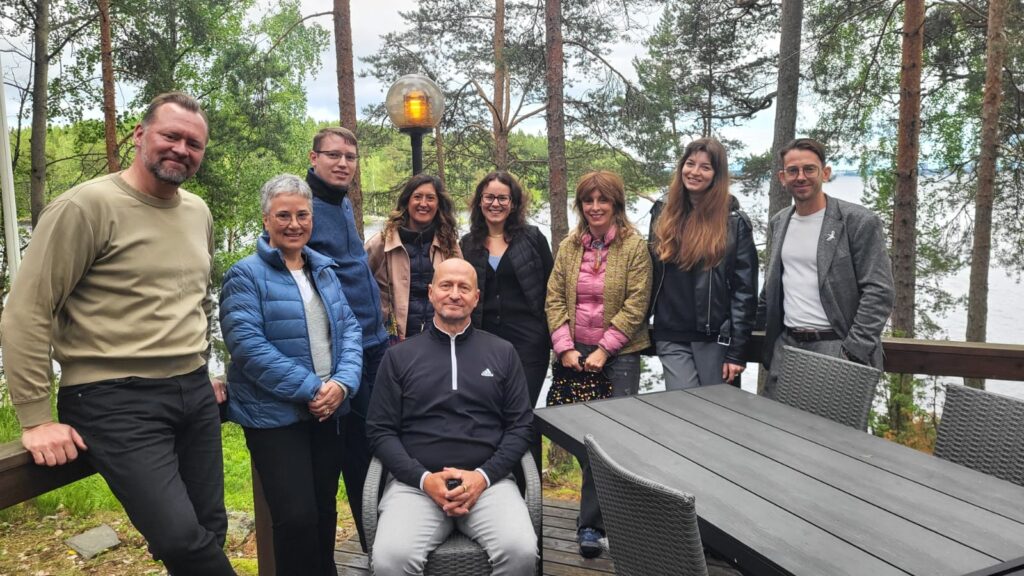
Efus plays a key role in structuring this interregional learning process by mapping existing policy frameworks, identifying skills gaps and highlighting promising practices across the four partner regions.
The first of a series to be held throughout the project, the field visit in Tampere helped the partners refine the questions that will guide the next phases of the project: How can regions better anticipate future labour needs in security-related sectors? What governance mechanisms ensure lasting cooperation between training providers, industry and public authorities? How can prevention, resilience and digital security be addressed in a coherent workforce strategy?
Next steps
The next SafeSkills workshop will take place in Région Sud (Provence-Alpes-Côte d’Azur) on 23–24 April. Partners will have the opportunity to gather on-site information on how this regional authority has built a comprehensive security strategy linking transport, education, the justice system, cybersecurity and vocational training.
The lessons from SafeSkills will also directly feed into Efus’ Working Group on Regions and Supra-local Authorities, which was recently established to strengthen dialogue between regional governments and cities and reinforce the role of European regions as key actors in urban security and skills development in the safety and security sectors.
> More on the SafeSkills project
> More on Efus’ work on security professions
Photo at the top ©iStock EvgeniyShkolenko