




Paris, January 2026 – Efus launched this month a new EU-funded project, which it designed and will lead, whose objective is to train local stakeholders in better dealing with the complex challenges linked to drug trafficking, particularly among young people.
Titled CAPABLE, this two-year project (2026-2027) gathers as partners the European Harm Reduction Network – Correlation (E-EHRN), the Global Initiative against Transnational Organised Crime (GI-TOC) and Ghent University (Belgium). Four cities are also associated: Cali (Colombia), Genk (Belgium, not to be confused with Ghent), Lisbon (Portugal), and Rotterdam (Netherlands).
A growing challenge for local and regional authorities
Local and regional authorities across Europe are increasingly confronted with illicit drug markets, which are becoming more complex. This is due to a combination of factors, notably organised crime’s ever-expanding reach, the availability of major drugs and the ease with which users can procure them online, and the diversification of drugs.
Public health, urban security and social cohesion are impacted in cities and towns of all sizes and even increasingly in rural areas as public authorities grapple with the fast-evolving and complex challenges linked to drugs and trafficking.
Young people on the front line
Young people from marginalised neighbourhoods are particularly affected, whether as users, victims of violence or low-level recruits. On the other hand, frontline actors on the ground – local police, municipal crime prevention services, youth workers… – are increasingly exposed to complex situations involving drugs in public spaces, vulnerable youths and violence. Many feel they are insufficiently equipped to understand evolving drug phenomena and coordinate with other services.
For their part, local authorities observe that drug use, drug markets, violence and social harm intersect in the same neighbourhoods and public spaces.
Training all actors together
The project therefore deliberately adopts an integrated approach rather than a siloed one, promoting a balance between prevention, risk and harm reduction, and security considerations. This reflects how local authorities should act in practice, not how policies are often structured on paper.
The thrust of the project is also pragmatic: it consists in giving common training to all the relevant stakeholders, not only to increase knowledge and skills, but also to foster stronger cooperation among them. This training programme will be developed through research, co-creation workshops and feedback from the four associated cities.
A shared learning journey
“We at Efus invite all our partners to consider CAPABLE as a shared learning journey that will eventually benefit local and regional authorities and frontline actors across Europe,” said Elizabeth Johnston, Efus Executive Director. “It is also directly linked to our Coalition of the willing initiative against drug-related violence and trafficking. The Coalition shows that cities are ready to act but need stronger skills and tools. This project is a concrete capacity-building response to that political momentum. While the complexity of the situation can be daunting, pragmatic and coordinated actions can make a real difference and contribute to tangible solutions.”
> More on the CAPABLE project
> More on the Coalition of the willing – against drug-related violence and trafficking
> More on Efus’ work on drugs
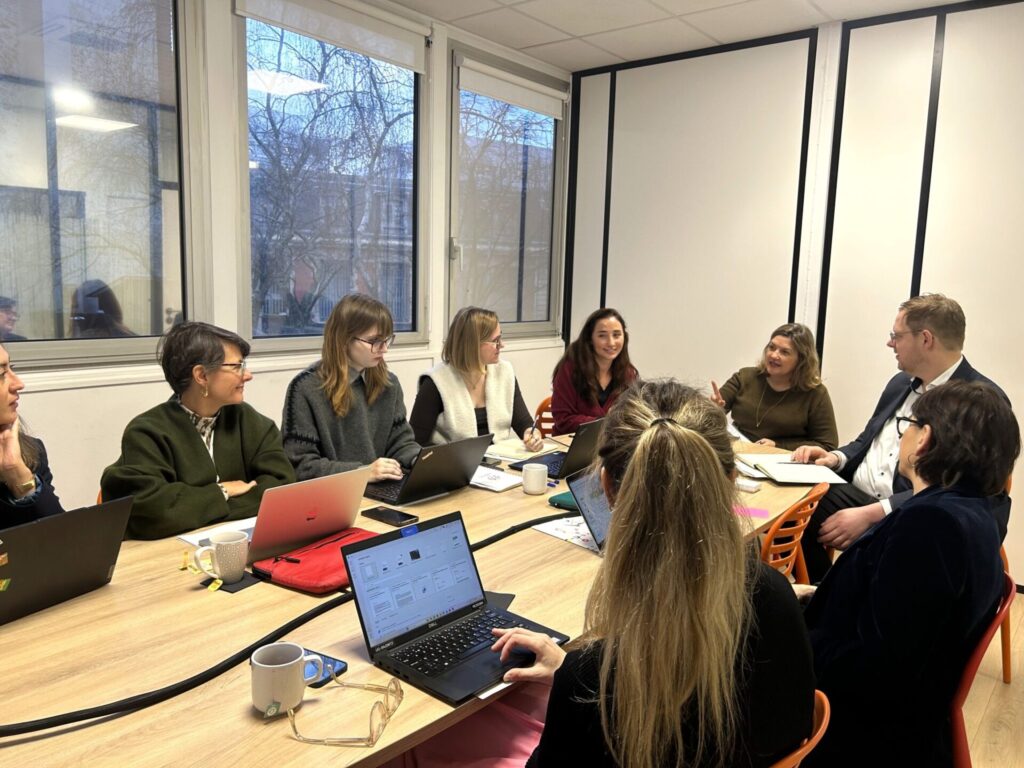
Centre photo: the project partners and the Efus team at the kick-off meeting, Paris, January 202

