




September 2026 – Living in a safe city is a priority for European citizens, 75% of whom reside in urban areas, according to the European Union’s Eurobarometer. Indeed, “security and safety in public spaces” is mentioned as their top concern by 36% of EU citizens, in second position behind the “quality of public services” (42%).
One of the key actors (albeit not the only one) in preserving and reinforcing security in cities is the local police, which is why the European Forum for Urban Security (Efus) has been working in this area for many years.
Local policing takes different forms across the 27 EU Member States, but the main challenges are common: How to make it more efficient? How to bring it closer to citizens so that local police are better able to deliver on their missions? How to better equip and professionalise local police forces? How to better use fast-moving technologies and operate in the digital space?
EU-funded projects
In order to explore these questions and design innovative responses, Efus is currently involved in three European cooperation initiatives, two of which are EU-funded projects, together with dozens of partners across 14 European countries: local and regional authorities, national public bodies, local police forces, universities and research organisations, as well as international institutions.
These are:
- EU-POLNET is a network of European local police forces. Operating within Efus, it seeks to develop local police forces’ expertise and promising practices through peer-to-peer exchanges, and to promote the role of local police forces in urban security. As such, the knowledge and practical expertise garnered within EU-POLNET informs the work carried out in all the projects on which Efus is working and that involve local police forces, even those that are not directly dedicated to policing but are relevant to police.
- DIVERPOL (Inclusive and Trust-Based Policing for Diverse Communities) is a new project led by the city of Turin (Italy) and designed jointly with Efus and the United Nations International Organization for Migration (IOM). It seeks to enable local police forces to better represent the diversity of the population they serve and as such, improve their relations with citizens and mutual trust.
- KOBAN (Identifying future capabilities for community policing): led by the Netherlands police, it brings together 17 partners with the aim of designing an innovative, research- and practice-based community policing initiative.
A Europe-wide network
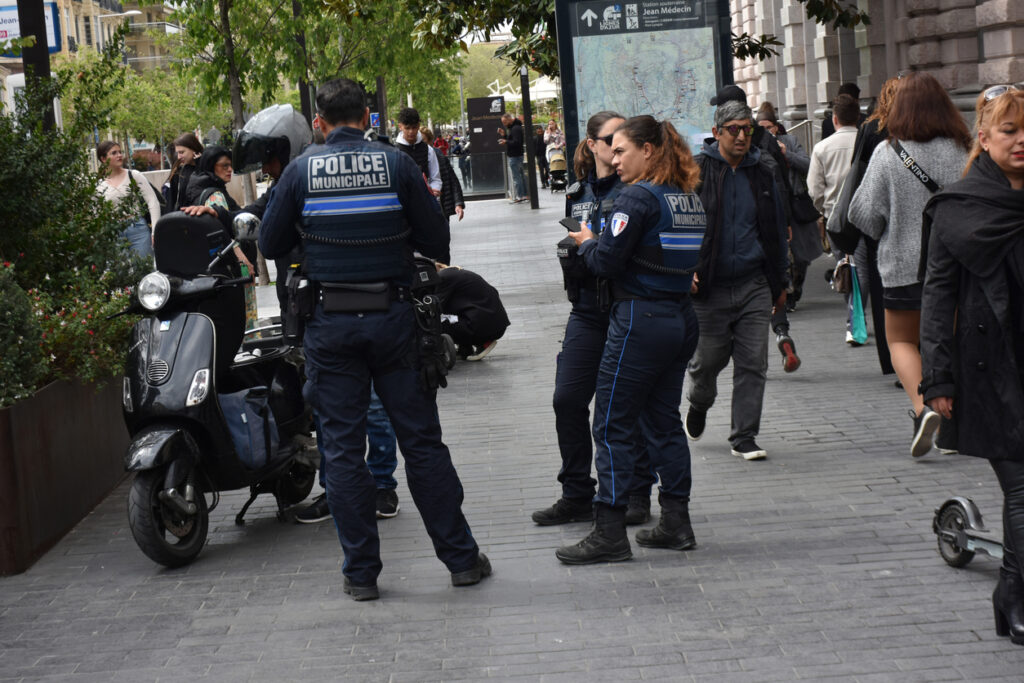
Established in 2024, EU-POLNET is, to our knowledge, the only European network of local police forces, gathering 23 forces from 12 European countries (Belgium, Estonia, France, Greece, Hungary, Italy, Latvia, Lithuania, Portugal, Slovakia, Spain, and Switzerland).
With the objective of exchanging practices and know-how to improve local policing in Europe, the network organises field visits, police academies and regular meetings and webinars, either in person or virtually.
As such, the EU-POLNET network gathered in Gdańsk (Poland) on 23-24 September to celebrate the 35th anniversary of the city’s municipal police and work together on improving local policing and making it more innovative.
The conference included sessions on the impact of hate speech on urban security, on the work carried out through the KOBAN project, and on another EU-funded project in which Efus is a partner, OSPREY (Online Safety and Security for Protection of Public-Facing Professionals and Democratic Resilience), which looks at how to better protect professionals in contact with the public, such as police officers, from online abuse.
In cities that are ever more diverse, and this at a time when our societies seem to be ever more fragile, increasing the intercultural skills of police, whether local or national, is considered by public authorities, the public and police forces themselves as key to strengthening mutual trust and social cohesion.
More diversity
Slated to be launched in early October, DIVERPOL (2026-2028) will be working on an aspect that is often mentioned both by citizens and public authorities as in need of improvement: the diversity of local police workforce, in particular officers in contact with the public.
Indeed, in cities that are ever more diverse, and this at a time when our societies seem to be ever more fragile, increasing the intercultural skills of police, whether local or national, is considered by public authorities, the public and police forces themselves as key to strengthening mutual trust and social cohesion.
The idea is to boost recruitment of women, LGBTQIA+ and people from diverse ethnic and social backgrounds in order to better match the composition of European cities’ population. This will enable local police forces to be more in tune with the population they serve and will contribute to build mutual trust.
The overarching goal of DIVERPOL is to pioneer an inclusive, proximity-based urban safety model built on mutual trust. Key pillars of the project include:
- intercultural training: Developing targeted training programmes for local police officers focusing on LGBTQIA+ rights, ethnic minority awareness, and intercultural competencies
- community co-design: Establishing a dedicated advisory committee (called the CoPmittee) to work directly with marginalised communities to design local safety initiatives.
- inclusive recruitment: Developing new recruitment strategies and formats designed to make local police forces more representative of the diverse populations they serve.
Local pilot projects
As part of KOBAN (2024-2027), Efus and its partners are currently organising pilot projects in seven cities and provinces: Brussels (Belgium), Lisbon (Portugal), Radom (Poland), Savonlinna (Finland), Utrecht (Netherlands), Valencia (Spain), and Zaanstad (Netherlands). The pilots will be based on the priorities identified beforehand by the cities and police forces participating in the project: bullying in schools, improving trust between young people and police, engaging with local communities of migrants and asylum seekers…
Furthermore, surveys that have been conducted in each partner city/region on citizens’ needs and expectations, in particular regarding access to local police, trust, and preferred means of communication (e.g., whether in person or digitally). The objective is to test innovative community policing methods and approaches and check if they match citizens’ demands. The results will then be replicable in other European cities and/or regions.
Photo at the top: The Gran Vía in Madrid (Spain), July 2025 ©iStock Javier Paredes Perez
> All Efus member cities are welcome to join EU-POLNET. More information here.
> More information on the work carried out by Efus on police
> Check out our two podcast episodes Perception of local police across Europe: views from the inside, and Les polices locales au cœur de la coopération européenne : le réseau EU-POLNET (in French)