



October 2026 – The Provence-Alpes-Côte d’Azur (PACA) Region, which is a partner in the European SafeSkills project on security-related professions, has for the past ten years or so been running an educational mediation scheme in secondary schools to support young people and prevent anti-social behaviour and delinquency. We met with Mortal Yahi, director of the Prevention, Citizenship and Integration Unit at the Montjoye association, which was chosen by the PACA Region to implement this policy.
What is the scope of the Prevention, Citizenship and Integration Unit’s work?
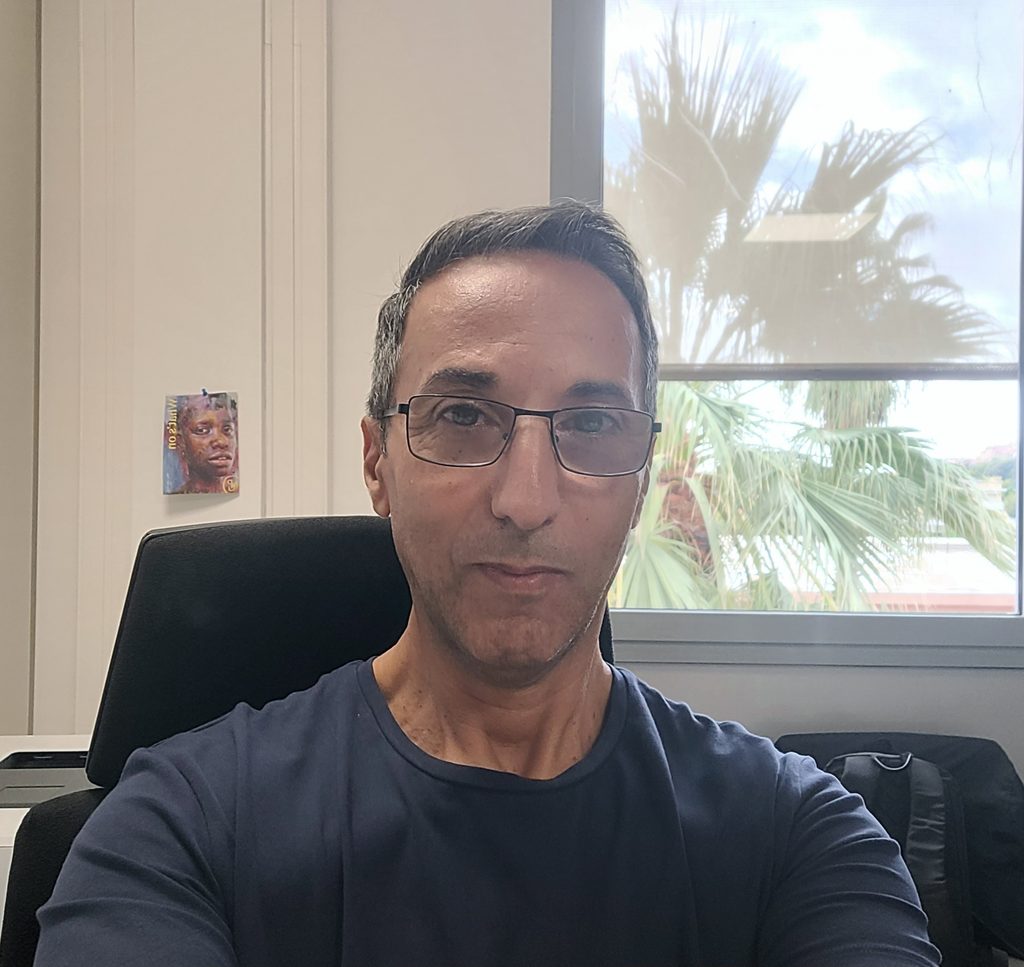
Mortal Yahi (MY): Our unit comprises around 70 people working across a range of initiatives. Its main areas of focus are specialised prevention, supporting vulnerable groups, and social cohesion, with a particular emphasis on young people (aged 10 to 25) in vulnerable situations.
Our work is primarily based on our expertise in educational social work. The educational relationship takes precedence, along with the protection of vulnerable groups, the prevention of social breakdown, support and access to resources.
Do all 70 professionals carry out mediation work?
MY: We have a specialised prevention team operating under the Social Action and Families Code. This is a child protection role. We also work under agreements with the Departmental Council and the Nice Côte d’Azur Metropolitan Area, in distinct areas and with young people aged between 10 and 25.
Our teams consist of specialist youth workers who carry out outreach work in so-called ‘sensitive’ neighbourhoods, priority neighbourhoods, in city centres or in rural and peri-rural areas. We build a relationship with these young people on the street, without a formal mandate. Once the young person engages with the relationship, the youth worker can offer them help, guidance and personalised support to address their needs and difficulties: idleness, dropping out of school, family relationships, issues related to bullying, violence, social media, radicalisation, prostitution… This has been at the heart of the service since its inception.
“We have a team of 22 professionals on the ground who generally work in pairs, comprising a qualified youth worker and a trainee youth worker. We work exclusively in the vicinity of secondary schools, on the streets and in classrooms, carrying out group-based prevention initiatives.”
What do your educational mediation activities involve?
MY: As part of our remit for the PACA region, our educational mediation work is aimed primarily at secondary school pupils found in the vicinity of their schools: this group consists of older teenagers and young adults. For this specific activity, we have a team of 22 professionals on the ground who generally work in pairs, comprising a qualified youth worker and a trainee youth worker.
We work exclusively in the vicinity of secondary schools, on the streets and in classrooms, carrying out group-based prevention initiatives. Our teams maintain a regular and recognisable presence, characterised by a distinctive uniform bearing the logos of the Region and our association. This also serves as a way to build rapport and helps distinguish the professionals from other users of public spaces.
The teams are present from Monday to Friday in every school. We cover 80 per cent of the secondary schools in the Alpes-Maritimes (there are around thirty in total).
What kinds of problems do young people raise?
MY: These can include violence amongst young people, bullying, cyberbullying, risky behaviour, substance use, reports of concerning adults loitering near the school, sexual violence, situations of distress…
Do you notice any new trends today compared to 10 years ago?
MY: The difference is that 10 years ago, young people were less influenced by social media. The dangers associated with social media weren’t recognised as such; it wasn’t yet a major issue, whereas today it’s of paramount importance. The issues are largely the same, but they’re now amplified by social media.
“We clearly explain who we are and who we are not : we are not security guards, we are not part of the school’s staff. This helps to build trust and forge a relationship.”
Are the young people you support mostly boys, or is there an equal proportion of boys and girls?
MY: We work with boys and girls in equal measure. This is a shift that has taken place over the last 10–20 years: the streets are now occupied equally, or almost equally, by boys and girls. Issues relating to the use of public space are not gender-specific.
How do you identify the young people who need educational mediation amongst all those who are around the school in the mornings, at the end of the day or during breaks?
MY: Our mediators approach the young people, introduce themselves and ask them whether they are interested or not. The fact that our teams are regularly present helps to build a relationship. We clearly explain who we are and who we are not : we are not security guards, we are not part of the school’s staff… This helps to build trust and forge a relationship.
MY: What is your relationship with school staff, particularly teachers?
MY: School staff are a resource to which we can refer a young person, just as other local organisations: health services, local youth support schemes, leisure providers, the police, victim support… It depends on the needs expressed. We also have a duty to raise the alarm when there is a risk to safety.
“It certainly is less costly to intervene at an early stage, as we do, taking a preventative approach, rather than intervening after the event. It is an investment.”
How do you assess the results of this mediation work?
MY: We use software to record all our interventions in quantitative terms: the number of contacts, interventions, one-to-one meetings and actions. This tool enables us to track our entire range of activities. Based on this data, we add qualitative aspects, for example regarding the atmosphere in the vicinity of a particular school. This enables us to produce periodic reports which are sent to headteachers of secondary schools, as well as a risk map of the areas surrounding the schools, which headteachers can cross-reference with the data they have on the atmosphere inside the schools. The report is also sent to the Regional Education Authority and the Regional Council.
Furthermore, we draft alert reports following every incident involving danger or a risk of harm: around 200 over the last two academic years. These highlight a wide variety of situations. They also enable the various professional bodies to take action within their respective fields. To give you an example, we had a case where the police had to intervene following an alert to prevent an ambush.
What is the cost of this scheme?
MY: I cannot give you a specific figure for reasons of confidentiality. That said, the main item of expenditure is the wage bill, given that our teams consist of professionals specialising in child welfare and social integration, with two or three years’ higher education. What is certain is that it is less costly to intervene at an early stage, as we do, taking a preventative approach, rather than intervening after the event. It is an investment.
Is this scheme specific to the PACA Region? Can it be replicated elsewhere?
MY: Yes, it is specific to the PACA Region and is therefore unique in France. The Region was keen to invest in this area of public order through the prism of educational intervention. It is an approach that could certainly be of interest to other regions; indeed, representatives from some of them have come here to understand and see what is being done. This demonstrates the validity of our approach, which is based on prevention and educational mediation. Our methodology can be adapted to other areas, provided, of course, that it is tailored to the specific circumstances of each.
What do you see as the main lesson to be learnt from this experience?
MY: I would say that we have set up a laboratory for social and preventive innovation. Our experience shows that social work professions can be a resource for maintaining and strengthening urban safety whilst retaining their own values, which are based on human relationships.
> the association’s websites: passaj.fr, Montjoye and the Prevention, Citizenship and Integration Unit
> more about Efus’s work in the field of mediation
> more about the SafeSkills project