



A new European project designed and led by Efus will develop practical tools for preventing drug market-related violence and other harms at the local level and reducing its impact on urban communities. It brings together municipalities, researchers, police and community organisations.
October 2026 — Violence linked to drug markets is an increasingly complex challenge for European cities, with consequences that extend far beyond crime itself, affecting public health, social cohesion and residents’ trust in public institutions.
Addressing these problems requires more than just law enforcement. Municipal authorities, police, health professionals, social services and community organisations each hold part of the picture, yet their responses can remain fragmented.
A project designed and led by Efus
A new European initiative aims to help bridge these gaps. PRISM (Preventing Drug Market-Related Violence and Other Harms through Innovative Strategies at the Municipal Level), an EU-funded project designed and led by the European Forum for Urban Security (Efus), will work with cities to develop evidence-based approaches that combine public safety, social prevention and public health.
The project will feed into the Coalition of the willing against drug-related violence and trafficking set up by Efus to gather European cities and regions committed to strengthening and promoting local policies to combat drug-related violence and harm.
Understanding the realities behind the violence
Running until March 2030, PRISM brings together 12 partners and 12 associated partners, including local authorities, research institutions, law enforcement agencies and organisations specialising in prevention, technology and ethics. Its overarching ambition is to reduce drug market-related violence at the local level by equipping municipalities and frontline practitioners with practical tools, knowledge and skills.
Drug market-related violence takes many forms, from shootings, explosions and intimidation campaigns to the exploitation of vulnerable people by criminal networks.
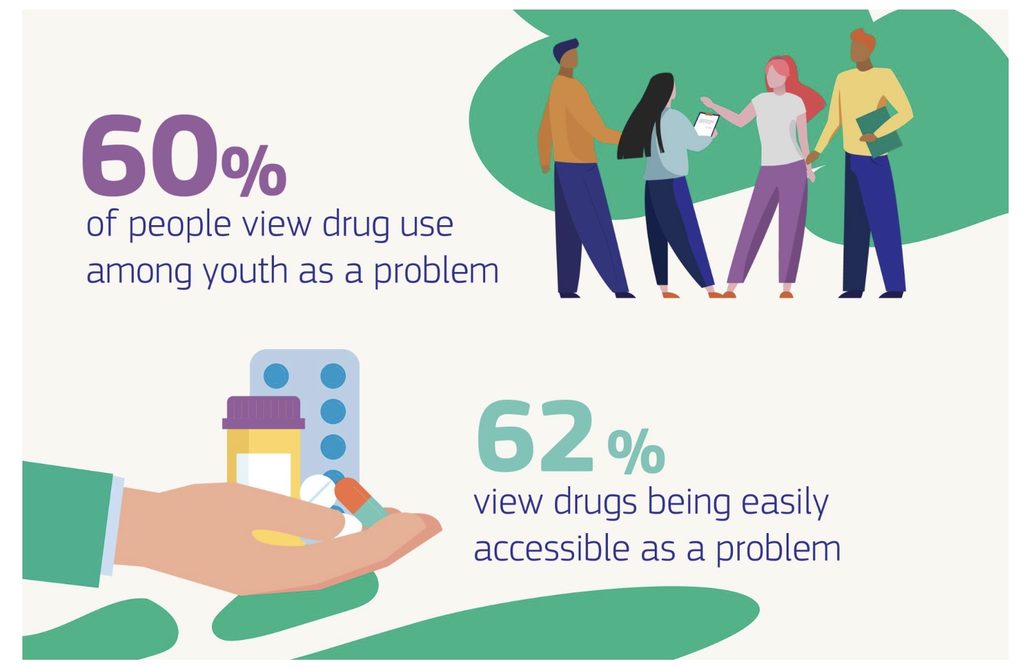
EU citizens have strong concerns about the impact of drugs on local communities, with 60% of respondents viewing drug use among children and teenagers as a problem in their local area. Source: European Commission, Directorate Migration and Home Affairs, 2024 Eurobarometer
Young people are particularly vulnerable
Young people are particularly exposed to some of these risks. Teenagers and young adults experiencing homelessness or social exclusion may be recruited into trafficking networks, while unaccompanied minors can be exploited as street dealers or couriers. Young adults in deprived neighbourhoods may be exposed to open drug scenes, while delivery-based trafficking networks, which use postal couriers, online platforms and gig-economy delivery drivers to provide drugs to consumers, can draw students into local markets. At the same time, recreational drug use now extends to all categories of society and remains largely invisible to public authorities and service providers.
Recognising the social and health dimensions of drugs
These different situations demand responses that recognise the social and health dimensions of the problem alongside its criminal aspects. An approach focused exclusively on enforcement risks overlooking the vulnerabilities that criminal networks exploit and the support needed by affected individuals and communities.
Yet local authorities often lack a sufficiently comprehensive understanding of what is happening in their territories. Information may be dispersed across police services, municipal departments, healthcare providers and civil society organisations, while opportunities to test and share effective prevention approaches remain limited.
The project will test its approach in four Efus member cities: Barcelona (Spain), Brussels (Belgium), Lisbon (Portugal) and Montpellier (France). Each city offers a different setting in which to examine the relationship between drug markets, violence, public health and local governance.
Local authorities at the heart
PRISM places local authorities at the centre of efforts to address these shortcomings. By bringing together research, frontline experience and municipal decision-making, it aims to help cities develop a more integrated understanding of violence associated with drug markets and identify responses adapted to their particular circumstances.
The project will test its approach in four Efus member cities: Barcelona (Spain), Brussels (Belgium), Lisbon (Portugal) and Montpellier (France). Each city offers a different setting in which to examine the relationship between drug markets, violence, public health and local governance.
Four cities, four different contexts
In Barcelona, the focus will be on drug market dynamics and tensions in public spaces, particularly in densely populated neighbourhoods. The project will explore ways to improve coordination between law enforcement, social services and community safety initiatives.
Brussels will examine challenges linked to its role as a major transit and administrative hub, with particular attention to cooperation across jurisdictions, early-warning protocols and coordination between local authorities and frontline responders.
In Lisbon, researchers and practitioners will explore local violence and public health harm reduction within Portugal’s long-standing drug decriminalisation framework. Improving cooperation between agencies and strengthening community-based interventions will be central to this work.
Montpellier will concentrate on prevention, youth protection and neighbourhood safety, including better information-sharing between municipal actors, police and local associations.
Although the four cities will work within a common framework, PRISM does not seek to impose a single model on different urban environments. Instead, the pilots will examine how prevention strategies and operational tools can be adapted to local governance, social conditions and patterns of harm.
The lessons drawn from these pilots are intended to inform approaches that other European municipalities can learn from and adapt.
From research to practical solutions
The first phase of the project will establish an evidence base combining scientific research, policy analysis and fieldwork. Led by the University of York, the research will draw on disciplines including criminology, sociology, political science, economics, geography, psychology and public health.
Field research coordinated by Inserm, the French National Institute for Health and Medical Research (Institut national de la santé et de la recherche médicale), will investigate local dynamics in the four pilot cities through interviews, focus groups and ethnographic observation involving relevant stakeholders. Efus will map promising municipal and frontline responses, including approaches to prevention, early warning, youth diversion, policing, harm reduction and multi-agency coordination.
This work will feed into a comparative framework to help cities understand how different drug market structures, governance models, levels of violence and local vulnerabilities shape the responses available to them.
PRISM will develop a training programme for practitioners and other stakeholders, combining online learning, intensive in-person workshops and applied work in the pilot cities.
A decision-support tool
A central innovation of the project will be PRISM-LENS, a digital decision-support tool being developed by technology partner ITTI. The tool is intended to help local authorities bring together relevant information and analyse drug market-related violence more comprehensively, supporting better-informed decisions and closer coordination between services.
Its development will involve municipal stakeholders and frontline practitioners to ensure that the tool responds to operational needs. Subject to appropriate access arrangements and safeguards, relevant information may be drawn from crime data, social services, public health, open sources and communities.
Privacy, data protection, non-discrimination and proportionality will be integral to the process. The project intends to establish clear rules governing data ownership, quality and use, including anonymisation or pseudonymisation where appropriate.
Crucially, PRISM will move beyond research and technology development to test and validate innovative prevention approaches in real-life urban settings. The aim is to assess how the tool and associated interventions work in practice, identify their limitations and establish the conditions under which they can be used effectively.
PRISM will also develop a training programme for practitioners and other stakeholders, combining online learning, intensive in-person workshops and applied work in the pilot cities.
Investing in people and local innovation
Technology alone cannot deliver better prevention. PRISM will also develop a training programme for practitioners and other stakeholders, combining online learning, intensive in-person workshops and applied work in the pilot cities.
Training will cover evidence-based responses, practical use of the LENS tool and approaches adapted to local needs. A separate online masterclass for elected officials will examine how drug market-related violence is represented in traditional and social media, offering guidance to support informed public discussion.
Local Impact Fund
The project will also establish a Local Impact Fund to support the development and dissemination of local initiatives. Planned activities include defining funding criteria, launching a call for applications, selecting initiatives and providing guidance during implementation. Small municipalities and grassroots civil society organisations are specifically identified for targeted outreach.
By encouraging local experimentation and peer-to-peer exchange, the fund aims to help promising approaches emerge beyond the four pilot cities. PRISM’s associated partners, which include municipalities and specialist organisations from across Europe, will also contribute to the wider exchange of knowledge and experience.
This broader network is important to the project’s ambition to make its findings useful to cities with different resources, institutional set-up and levels of experience in tackling drug market-related violence.
Building trust and lasting impact
For Efus and the project partners, success will depend not only on whether its tools function effectively, but also on whether they are considered fair, legitimate and useful by the people expected to use them and the communities they affect.
The project will therefore assess the social acceptability of LENS, examining questions of trust, fairness, privacy and alignment with local needs. Ethical oversight will run throughout the project, with particular attention to gender, inclusion, responsible data use and legal compliance.
Communication and policy engagement will also play a central role. Led by the Italian consultancy Deep Blue and Efus, these activities will seek to disseminate findings, develop policy recommendations and promote public awareness through ethical, stigma-free and trauma-sensitive storytelling.
Drug market-related violence requires not only addressing criminal activity, but also understanding the social and public health conditions in which it takes hold.
Strengthening the capacities of local authorities
By the end of the project, PRISM aims to deliver a validated, user-friendly decision-support tool for municipalities, alongside tested and documented prevention practices that can be adapted to different local contexts. Other intended results include stronger capacities among local authorities and practitioners, improved cooperation between agencies, and greater trust and engagement between communities and public institutions.
The project will also seek to ensure that its findings inform wider European policymaking and contribute to the exchange of evidence and practical experience on organised crime, harm reduction, drug policy and urban security.
Responses more adapted to local communities
Whether these ambitions translate into measurable improvements will depend on the evidence gathered and the lessons emerging from the four pilot cities. PRISM nevertheless offers a structured opportunity to test how research, local innovation and cooperation between institutions can help cities move beyond fragmented responses.
Its central proposition is that preventing drug market-related violence requires not only addressing criminal activity, but also understanding the social and public health conditions in which it takes hold. By bringing local authorities, researchers and frontline practitioners together, the project aims to help European cities develop responses that are better informed, more coordinated and more closely adapted to the communities they serve.
> More information on Efus’ work on drugs
> More information on the Coalition of the willing against drug-related violence and trafficking
Photo at the top ©iStock Gabrijelagal